

Traffic Is Only the Beginning
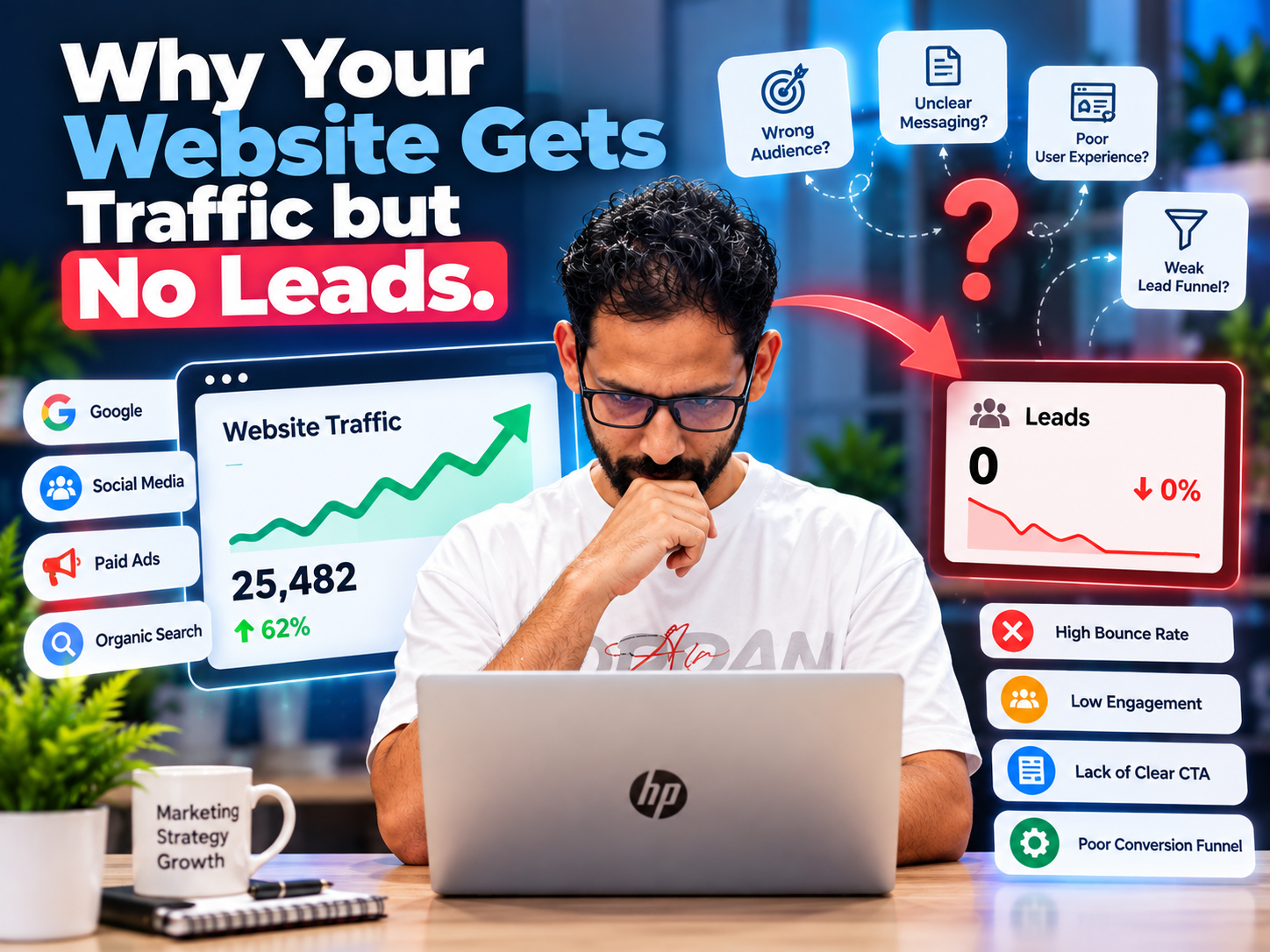
It is frustrating to see website traffic increasing while enquiries and sales remain flat. Businesses often respond by trying to get even more visitors, but the problem may not be traffic at all.
A website can receive substantial search, social or paid traffic and still produce few leads if the wrong people are arriving, the offer is unclear, the page creates friction or visitors do not trust the business.
The solution is to examine the entire journey from acquisition to conversion.
1. You Are Attracting the Wrong Traffic
Traffic volume can hide a targeting problem. An article may rank for a high-volume informational query but attract people who have no intention of buying the company’s services.
Review the search queries, referral sources, landing pages, locations and audience segments associated with your traffic. Look at qualified leads, not just sessions.
2. The Value Proposition Is Unclear
Visitors should quickly understand what you offer, who it is for and why they should consider your business.
A headline such as “Innovative Digital Solutions for a Changing World” may sound polished but tells a prospective customer very little. A clearer message identifies the service, audience and outcome.
3. Your Calls to Action Are Weak
A visitor who is interested but does not know what to do next may simply leave. Use clear calls to action that match the customer’s stage.
- Request a quote
- Book a consultation
- Schedule a demo
- Call the business
- View relevant case studies
- Download a useful guide
4. The Website Does Not Build Enough Trust
People need evidence before contacting a company, particularly when the purchase is expensive or involves professional services.
Use case studies, testimonials, reviews, client examples, credentials, process explanations, transparent contact information and useful educational content where appropriate.
5. The Landing Page Has Too Much Friction
Forms with too many fields can discourage enquiries. Confusing navigation, intrusive popups, slow pages and unclear pricing information can also increase abandonment.
Review the conversion path on mobile and desktop. Ask whether every step is necessary.
6. Your Mobile Experience Is Weak
A large share of website visits may come from smartphones. A page that looks acceptable on a desktop monitor can be difficult to use on a smaller screen.
Check text size, buttons, form fields, navigation, image loading and horizontal scrolling. Test real journeys rather than simply resizing a browser window.
7. Your Pages Do Not Match Search Intent
If a visitor searches for “commercial property valuation” and lands on a generic homepage, they may not find the information they expected.
Create dedicated pages for important services and audiences. Match the promise made in the search result to the content on the landing page.
8. The Website Is Slow
Performance affects usability. Large images, excessive scripts, poorly configured hosting and inefficient third-party services can make a page feel slow.
Measure Core Web Vitals and investigate the causes rather than relying on a generic speed score alone.
9. There Is No Follow-Up System
Not every visitor will convert on the first visit. Lead generation therefore includes what happens after a person submits a form.
Make sure enquiries reach the right person, receive an appropriate response and can be tracked. Depending on the business, automated email confirmations and CRM workflows may be useful.
A Simple Conversion Audit
Start with five questions:
- Who is this page designed for?
- What problem does it solve?
- Can the visitor understand the offer within seconds?
- Why should they trust this company?
- What is the clearest next step?
Measure the Funnel, Not Just Traffic
Track the journey from acquisition to outcome. Useful metrics can include qualified traffic, engagement, landing-page conversion rate, form completion rate, calls, booked appointments, qualified leads and ultimately revenue.
When possible, connect marketing data to actual sales outcomes. This prevents teams from optimizing for vanity metrics.
Final Takeaway
If your website gets traffic but does not generate leads, do not automatically conclude that you need more traffic. The issue may be targeting, messaging, trust, usability, performance, conversion design or follow-up.
Fixing the weakest stage of the customer journey can create more business value than simply increasing visitor volume.