
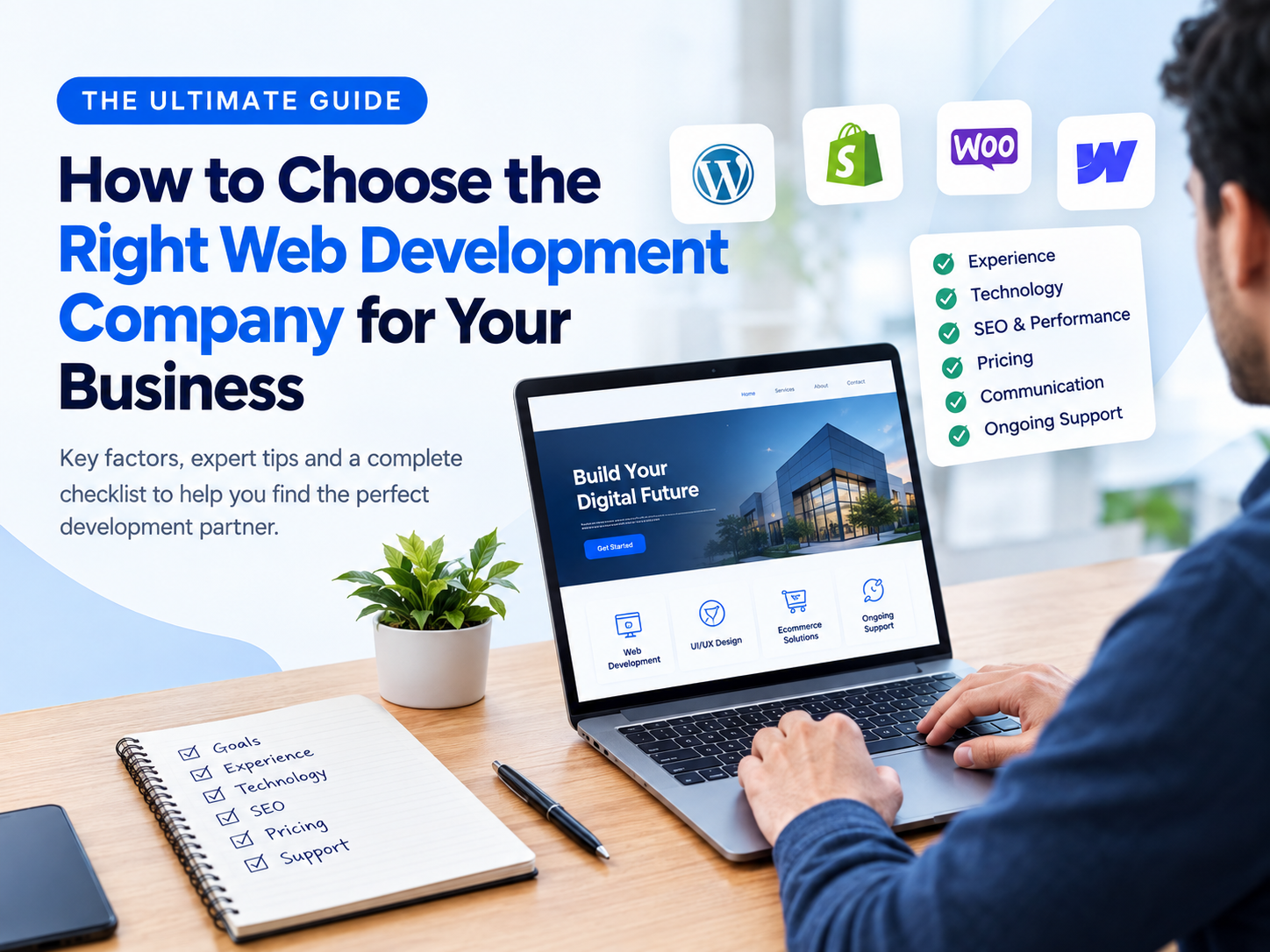
How to Choose the Right Web Development Company for Your Business
Choosing the right web development company is an important decision for any business.
Your website is more than an online brochure — it can be a powerful tool for generating
leads, selling products, building credibility, and supporting long-term growth.
With hundreds of web development agencies and freelancers available, it can be difficult
to know which provider is the right fit. The cheapest option isn’t always the most
cost-effective, and an impressive portfolio doesn’t necessarily mean a company understands
your business goals.
In this guide, we’ll cover the key factors to consider when choosing a web development
company and how to find a development partner who can deliver a website that performs
well today and scales with your business.
1. Define Your Website Goals First
Before contacting a web development company, clearly define what you want your website
to achieve.
Your goals might include:
- Generating more leads
- Increasing online sales
- Improving brand credibility
- Launching a new business website
- Redesigning an outdated website
- Improving website speed and performance
- Integrating third-party tools and platforms
- Automating business processes
- Creating a custom web application
Having clear goals makes it easier to communicate your requirements and evaluate
potential development companies.
2. Look at Their Relevant Experience
Don’t choose a company based only on how many websites they’ve built. Look for experience
that is relevant to your industry, business model, technology stack, and project requirements.
Review their portfolio and ask:
- Have they built similar websites?
- Do they understand your industry?
- Have they worked with businesses of a similar size?
- Can they handle custom functionality?
- Do their previous projects demonstrate good UX and responsive design?
- Can they provide examples of measurable results?
Relevant experience can reduce development risks and help the project move more efficiently.
3. Check Their Technical Expertise
A professional web development company should have a strong understanding of modern
development technologies and best practices.
Depending on your project, you may need expertise in platforms such as:
- WordPress
- WooCommerce
- Shopify
- Webflow
- Custom PHP development
- JavaScript
- React
- Next.js
- APIs and third-party integrations
- Cloud and hosting infrastructure
The right technology depends on your business requirements. A good development partner
should recommend an appropriate solution rather than forcing every project onto the same platform.
4. Evaluate Website Performance and SEO Knowledge
A website should look good, but design is only one part of a successful website.
Your development company should understand:
- Core Web Vitals
- Page speed optimization
- Mobile responsiveness
- Technical SEO
- Structured data and schema
- Clean HTML structure
- Image optimization
- Caching and asset optimization
- Accessibility
- Search-engine-friendly architecture
Ask potential developers how they approach performance and SEO during development
rather than treating them as an afterthought.
5. Make Sure They Understand Responsive Design
Your customers may access your website from phones, tablets, laptops, and desktop computers.
A professional website should provide a consistent experience across different screen sizes.
Ask whether the development company tests websites at different breakpoints and devices
and how they handle responsive layouts, navigation, forms, images, and interactive components.
6. Ask About Their Development Process
A reliable web development company should have a clear process.
A typical project may include:
- Discovery and requirements
- Sitemap and information architecture
- UX/UI design
- Development
- Content integration
- Third-party integrations
- Quality assurance
- Performance and accessibility testing
- Client review
- Launch
- Post-launch support
A structured process helps prevent misunderstandings and keeps the project moving
toward its objectives.
7. Understand What Is Included in the Price
Don’t compare companies based only on the initial project price.
Ask exactly what is included:
- Number of pages
- Design and development
- CMS setup
- Content migration
- Forms
- Integrations
- SEO setup
- Analytics
- Testing
- Hosting configuration
- Training
- Maintenance
- Post-launch support
A lower quote can become significantly more expensive if important requirements are
excluded from the original scope.
8. Ask About Communication and Project Management
Communication can have a major impact on the success of a website project.
Before hiring a company, find out:
- Who will be your primary contact?
- How frequently will they provide updates?
- How will tasks and revisions be managed?
- What project management tools do they use?
- How quickly do they typically respond?
- Who handles technical issues after launch?
Choose a development partner with a communication process that works well for your team.
9. Check Reviews and Client Feedback
Client testimonials can provide useful insight into how a company actually works.
Look beyond star ratings and read the details of reviews. Pay attention to comments about:
- Communication
- Technical expertise
- Meeting deadlines
- Problem-solving
- Quality of work
- Post-launch support
If possible, ask the company for relevant references or case studies.
10. Think About Long-Term Support
Launching a website is not necessarily the end of the project.
Your business may eventually need:
- Security updates
- Performance optimization
- New functionality
- Content updates
- SEO improvements
- Plugin and platform updates
- Integrations
- Conversion optimization
- Ongoing maintenance
Choosing a web development company that can support your website after launch can make
managing your digital presence much easier.
11. Ask the Right Questions Before Hiring
Before making a final decision, consider asking potential development companies:
What experience do you have with projects similar to mine?
Which technology or platform would you recommend and why?
How do you approach website performance and SEO?
How do you test websites before launch?
What happens if I need changes after launch?
Who owns the website, code, design files, and other project assets?
What ongoing support do you provide?
The answers can help you understand whether a company is genuinely equipped to handle your project.
12. Focus on Business Value, Not Just Development Cost
The cheapest development quote isn’t necessarily the best investment.
Instead, consider the overall value the company can provide.
A well-built website can help your business:
- Generate qualified leads
- Improve conversions
- Increase online revenue
- Reduce manual processes
- Strengthen your brand
- Improve customer experience
- Support future growth
The goal should be to find a development partner that understands your business and can
build a website that supports measurable business objectives.
Final Thoughts
Choosing the right web development company requires more than comparing prices and portfolios.
Look for a partner with relevant experience, strong technical knowledge, a transparent
development process, reliable communication, and a long-term approach to website performance
and maintenance.
Before making your decision, clearly define your goals, understand the project scope,
ask detailed questions, and compare companies based on the overall value they can provide.
The right web development partner can help turn your website from a basic online presence
into a valuable business asset.