

AI Has Moved From Experiment to Everyday Marketing Tool
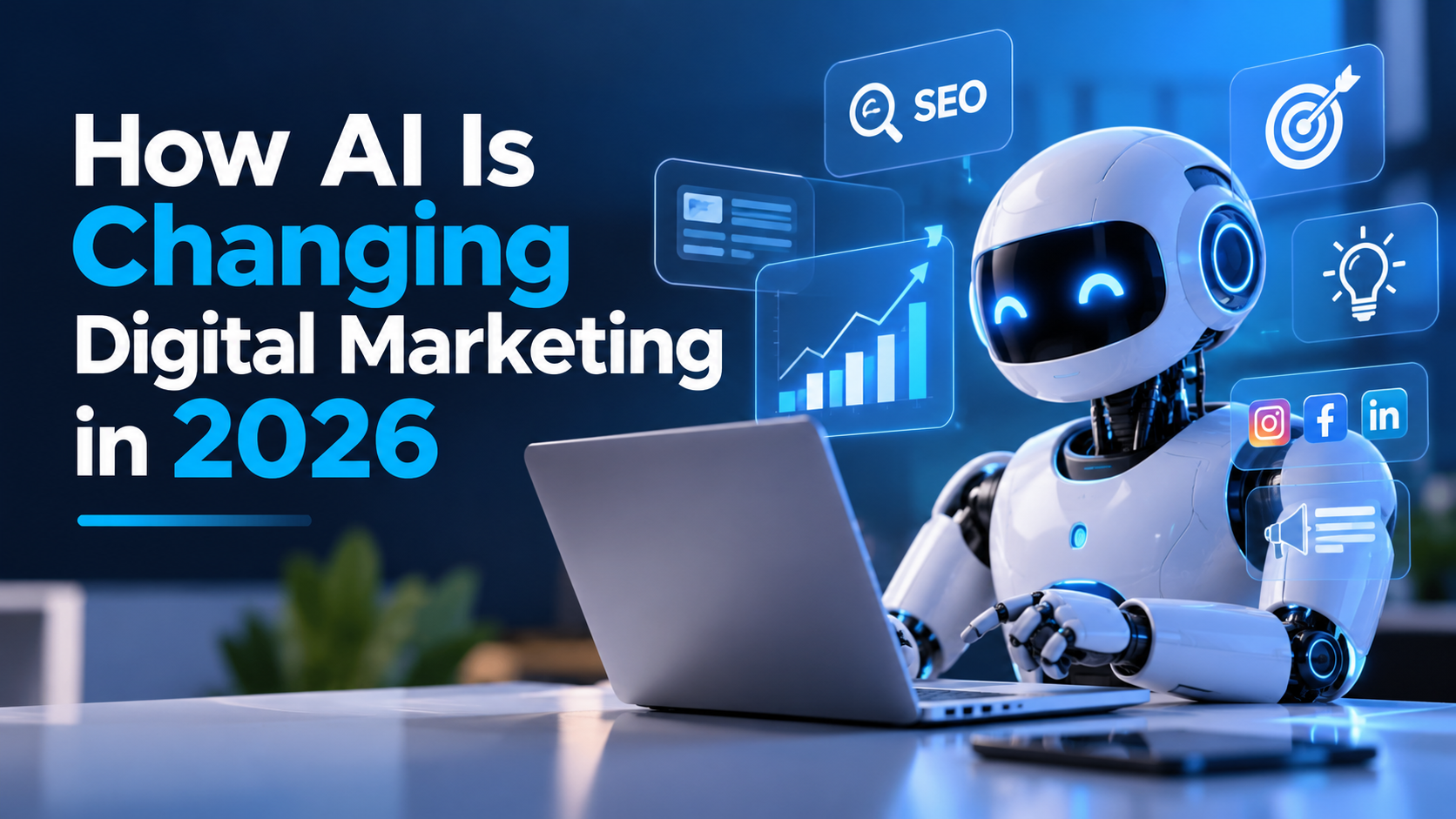
Artificial intelligence is now involved in many parts of digital marketing. Teams use AI to research topics, draft content, analyze customer behavior, generate creative variations, automate repetitive tasks and support customer conversations.
But the biggest change is not simply that marketers can produce content faster. AI is changing how marketing teams research audiences, create experiences, evaluate performance and respond to customer intent.
For businesses, the opportunity is significant, but successful AI adoption still requires strategy. Faster production does not automatically create better marketing.
AI Is Changing Content Production
Marketing teams can use AI to generate outlines, summarize research, develop first drafts, create variations and identify unanswered questions. This can reduce the time required for repetitive production work.
The human role remains important. Editors and subject-matter experts need to verify facts, add original insight, maintain brand voice and decide what is genuinely useful to the audience.
The strongest workflow is often human-led and AI-assisted: people define the strategy and quality standard while AI accelerates selected execution tasks.
Search Is Becoming More Conversational
Search behavior is evolving beyond traditional results pages. Users can now interact with conversational systems to research products, compare services and explore complex questions.
This means marketing teams need to think beyond ranking a single keyword. They need to understand the questions, entities and topics surrounding a customer’s decision.
Content should answer questions clearly, establish expertise and connect related information. Technical SEO remains important because AI-driven discovery still depends on accessible and interpretable digital information.
AI Is Improving Marketing Personalization
Personalization has historically depended on rules and predefined audience segments. AI can help marketers identify patterns across larger datasets and adapt messages to different customer contexts.
For example, an e-commerce business might create different product recommendations based on browsing behavior, previous purchases or customer lifecycle stage.
Personalization should still respect privacy, consent and applicable regulations. More data does not automatically mean better customer experiences.
Paid Advertising Is Becoming More Automated
Advertising platforms increasingly automate bidding, targeting, creative testing and campaign optimization. Marketers therefore spend less time adjusting individual settings and more time defining objectives, supplying quality creative assets and interpreting results.
The strategic questions remain human: Who is the customer? What problem are we solving? What offer should we make? What makes our business credible? What action should the customer take?
AI Is Changing Analytics
Traditional dashboards tell marketers what happened. AI-assisted analytics can help teams investigate why something may have happened and identify patterns worth examining.
For example, a marketing team may notice that lead volume increased while qualified opportunities fell. Instead of looking only at aggregate traffic, analysts can segment results by campaign, landing page, device, geography or customer type to identify where the change occurred.
Short-Form Video Production Is Becoming Faster
AI can accelerate ideation, scripting, captioning, editing, voice generation and creative testing. This allows smaller teams to experiment with more variations.
However, volume is not the same as effectiveness. Businesses still need a recognizable point of view, strong hooks, credible information and creative that fits the platform and audience.
Customer Support Is Becoming More Automated
AI assistants can handle common questions, guide visitors to relevant resources and help qualify enquiries. The most effective implementations combine automation with clear escalation paths for situations that require human assistance.
Businesses should define what the assistant can answer, what information it can access, what actions it may take and when a conversation must be handed to a person.
AI Creates a New Competitive Advantage: Better Experimentation
One of the most practical advantages of AI is the ability to test more ideas quickly. Teams can develop multiple headline variations, landing-page structures, ad concepts or email angles and then use real performance data to determine which deserve further investment.
This creates a marketing culture based on experimentation rather than assumptions.
What AI Cannot Replace
- Business strategy and positioning.
- Deep customer understanding.
- Brand judgment.
- Subject-matter expertise.
- Ethical and legal accountability.
- Relationship building.
- Final responsibility for published claims.
How Businesses Should Adopt AI
Start with a workflow rather than a tool. Identify repetitive marketing tasks that consume time but require limited strategic judgment. Then test AI against a measurable objective.
Document the process, establish quality controls and measure outcomes. If the tool saves time but reduces content quality or increases correction work, the workflow needs to change.
Final Takeaway
AI is changing digital marketing by making research, production, personalization, analysis and automation faster and more accessible. The businesses that benefit most will not necessarily be those producing the most content. They will be those that combine AI efficiency with strong strategy, original expertise, accurate data and human judgment.