

Digital Marketing Should Connect Activity to Business Growth
Digital marketing is sometimes reduced to a collection of channels: SEO, social media, paid advertising, email and content. But channels are only tools. The real purpose of marketing is to help a business achieve meaningful objectives.
That might mean increasing qualified enquiries, growing e-commerce revenue, entering a new market, improving customer retention or strengthening brand awareness.
A strong strategy connects each marketing activity to a stage of the customer journey and a measurable business outcome.
Start With the Business Goal
Before selecting a channel, define the goal. “Get more traffic” is an activity objective. “Generate 50 additional qualified enquiries per month” is closer to a business objective.
Clear goals make it easier to select appropriate tactics and evaluate performance.
Build a Strong Digital Foundation
Your website is often the central destination for digital marketing. It should communicate the value proposition, explain products or services, establish trust and provide clear conversion paths.
Technical fundamentals matter too. The site should be fast, accessible, secure, mobile-friendly and easy for search systems to understand.
Use SEO to Capture Existing Demand
SEO can help businesses appear when potential customers are actively researching problems, products or services.
Start with search intent rather than keywords alone. Build useful pages for important customer questions and connect them through logical internal linking.
Use Content to Build Trust
Content can help prospects understand a complex service before they speak to a salesperson. Guides, case studies, FAQs, videos and expert articles can reduce uncertainty and demonstrate knowledge.
The best content is connected to real customer needs rather than produced simply to fill a publishing calendar.
Use Social Media to Build Recognition
Social channels can help businesses remain visible between buying moments. Share useful information, customer stories, product demonstrations, team content and relevant industry insights.
Different platforms attract different audiences, so choose channels based on customer behavior rather than trying to maintain every possible account.
Use Paid Advertising for Targeted Reach
Paid campaigns can provide faster access to specific audiences, but they need clear offers, strong landing pages and reliable tracking.
Start with a defined hypothesis. Test audience, message and creative combinations, then scale what demonstrates business value.
Use Email to Develop Relationships
Email is useful for nurturing people who are not ready to buy immediately. Send educational content, product information, updates and relevant offers based on the customer’s relationship with the business.
Connect the Customer Journey
A person may first discover a company through a search result, later see a social video, read a case study and eventually submit a form. Marketing works better when these touchpoints support the same positioning and customer journey.
Use consistent messaging while adapting the format to the channel.
Measure What Matters
Build a measurement hierarchy:
- Business outcomes: revenue, profit, customers, qualified opportunities.
- Conversion metrics: leads, bookings, purchases and conversion rates.
- Acquisition metrics: organic traffic, paid traffic, referrals and campaign reach.
- Engagement metrics: watch time, email engagement and page interaction.
Do not let easy-to-measure numbers become the definition of success.
Marketing Is a System, Not a Campaign
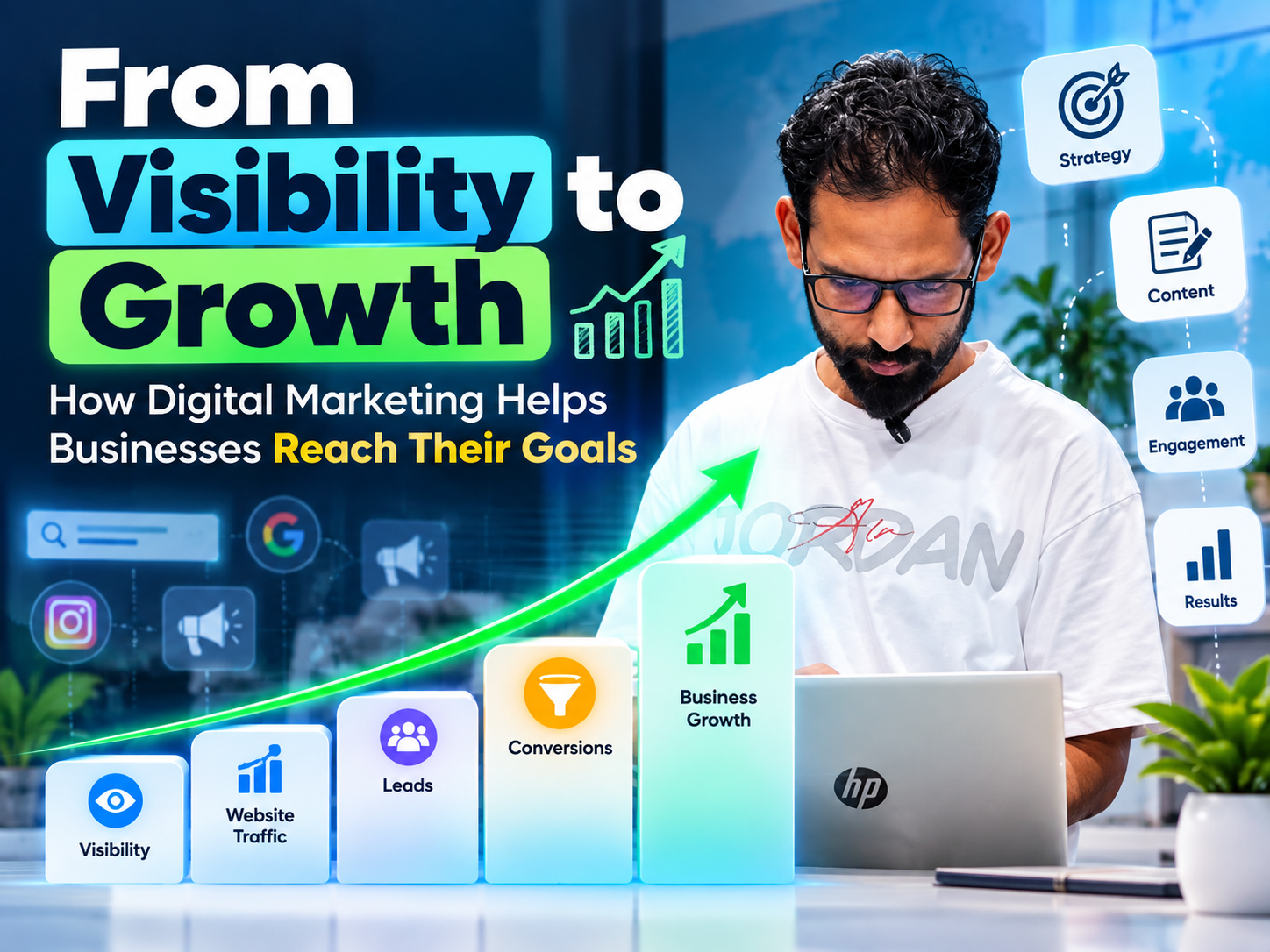
One campaign rarely transforms a business permanently. Sustainable growth usually comes from a repeatable system: attract the right audience, educate them, establish trust, convert demand and retain customers.
Each cycle produces data that can improve the next one.
Where AI Fits
AI can accelerate research, content production, analysis, personalization and workflow automation. It should support the marketing system rather than replace strategic thinking.
Human oversight remains essential for brand positioning, factual accuracy, customer understanding and final decisions.
Final Takeaway
Digital marketing creates the most value when visibility is connected to a clear customer journey and measurable business goal. SEO, content, social media, paid advertising, email and analytics are not isolated activities. Together, they can form a system that turns attention into trust, trust into action and action into sustainable growth.